
Column: World War II refugees, married for 70 years, know what displaced Ukrainians are facing as enemy troops advance
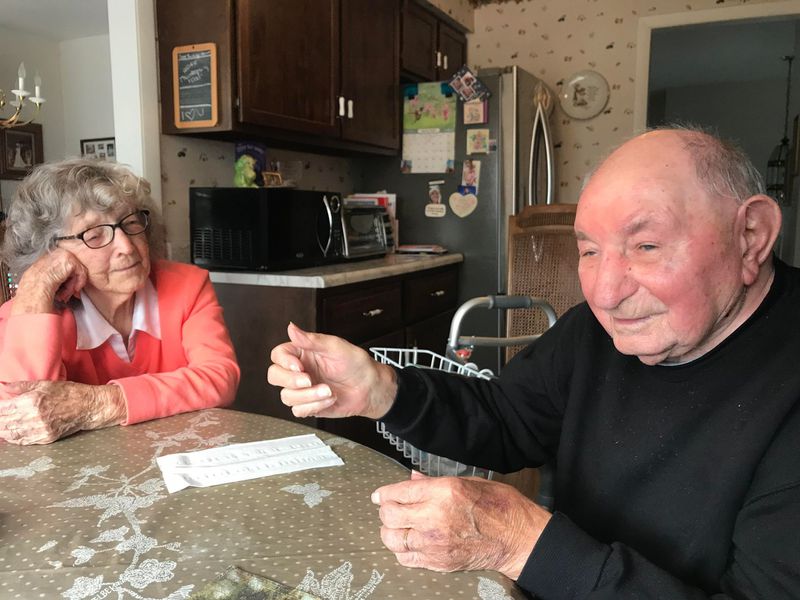
Jackie and Marty Smith, who met as Jacqueline Virginie Guillaume and Martin Schmidt in France after World War II, were teenage refugees who married in 1951 and later immigrated to this area. They are shown here in the kitchen of their Lakes of the Four Seasons home. (Jerry Davich)
Today’s column is the first in a series on Martin Schmidt and Jacqueline Virginie Guillaume, World War II teenage refugees from Europe who married in 1951 and later emigrated to this area as Marty and Jackie Smith.
Marty Smith squeezed his eyes shut to summon memories from 90 years ago.
“My mother died when I was 4 years old. My father was taken as a prisoner of war in a Russian camp,” he recalled, picking up a black-and-white photo from his childhood in Romania. “I was 15 when I had to leave my home in Transylvania.”
Martin Schmidt, his birth name, grew up speaking three languages — Transylvanian Saxon, Romanian and German — a trilingual skill set that would later save his life as German troops — Nazis — stormed across Europe during World War II.
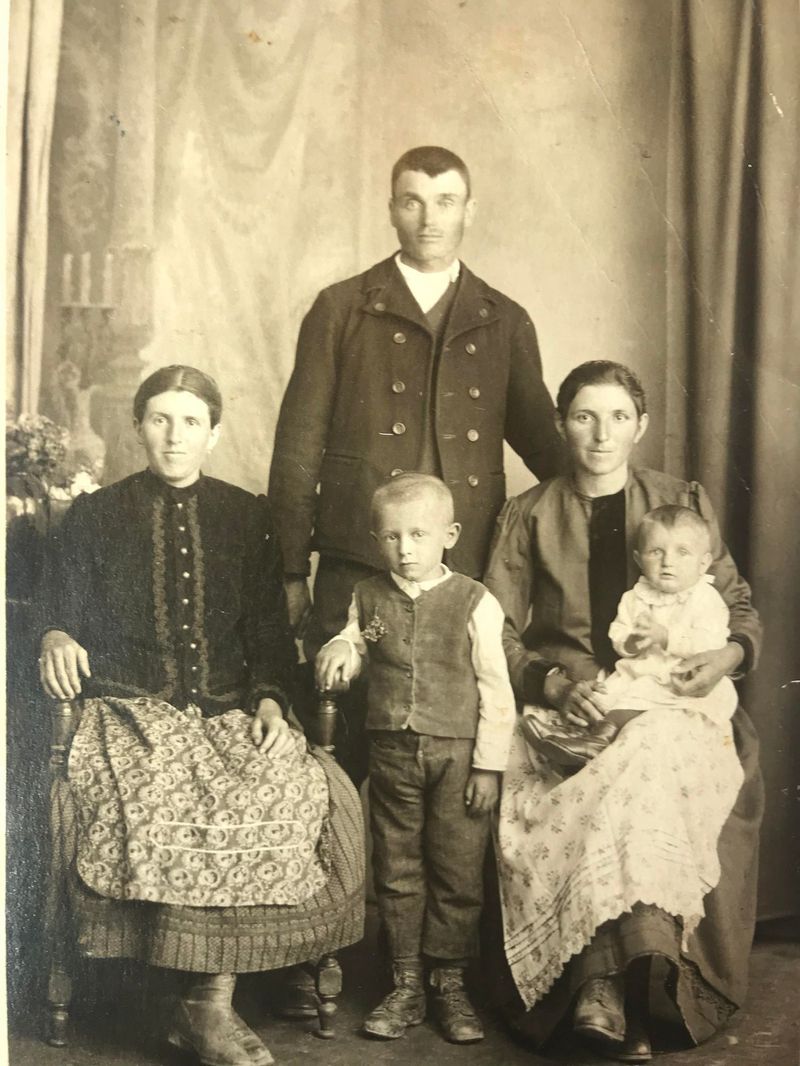
Marty Smith, whose birth name was Martin Schmidt, is shown here as a baby (on the right) on his mother's lap in 1928 in Transylvania, with his family. His mother died when he was 4 years old. (Marty Smith)
At 15, he fled Romania on his own, first to Hungary, then to Austria, after Nazi soldiers invaded his homeland. Young “Martzy,” as he was known, was a wartime refugee with no money, no possessions, no family and no plan of any kind.
“Whatever it took to stay alive,” said Smith, now 94, his Romanian accent still intact.
This is now the same survival mindset for more than 1 million refugees fleeing Ukraine after Russian troops recently invaded their homeland. The unprovoked land assault may be the largest conventional military attack in Europe since World War II. Many of these Ukrainian refugees will likely not return to their home for years, if ever.
“It’s just horrible to watch, bringing back so many terrible memories,” Jackie Smith said while looking at old photos from her younger years in Europe.
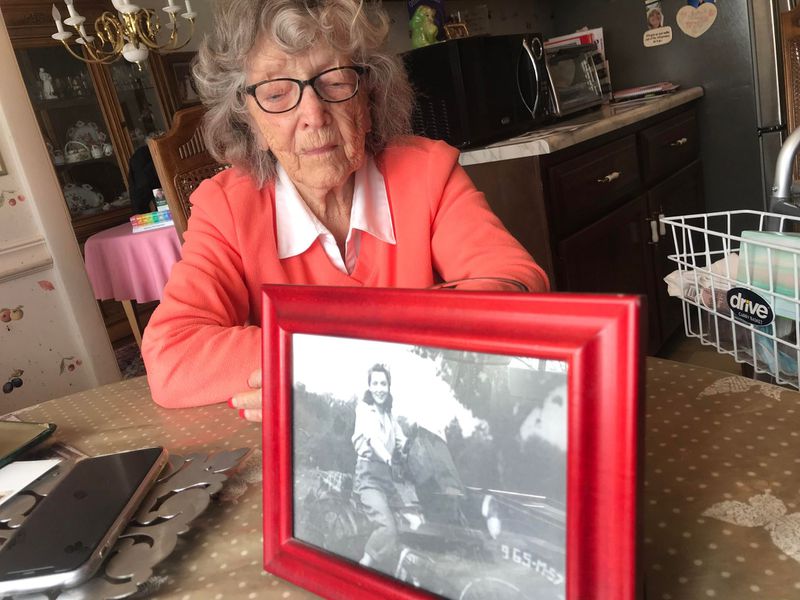
Jacqueline Virginie Guillaume, her birth name, fled her home in Neuville-sur-Ornain, France, with her mother, her younger siblings and an old wheel barrow to haul their only belongings as Nazi troops invaded their country.
As a teenager, she said she secretly helped French underground resistance fighters by transporting dynamite hidden in her bicycle handlebars as she rode past German soldiers. She also dismantled and cleaned weapons for French soldiers. Her mother never knew of her patriotic yet dangerous deeds.
“At that young age, patriotism is everything,” Smith said in a French accent.
At that point in history, Jacqueline and Martzy had not yet met. This would come in 1949 at a government office in Bar-le-Duc, France, and, later, at a social dance where they would first embrace. The same war that ripped apart their lives would later intertwine their lives, forever merging their fates and their families.
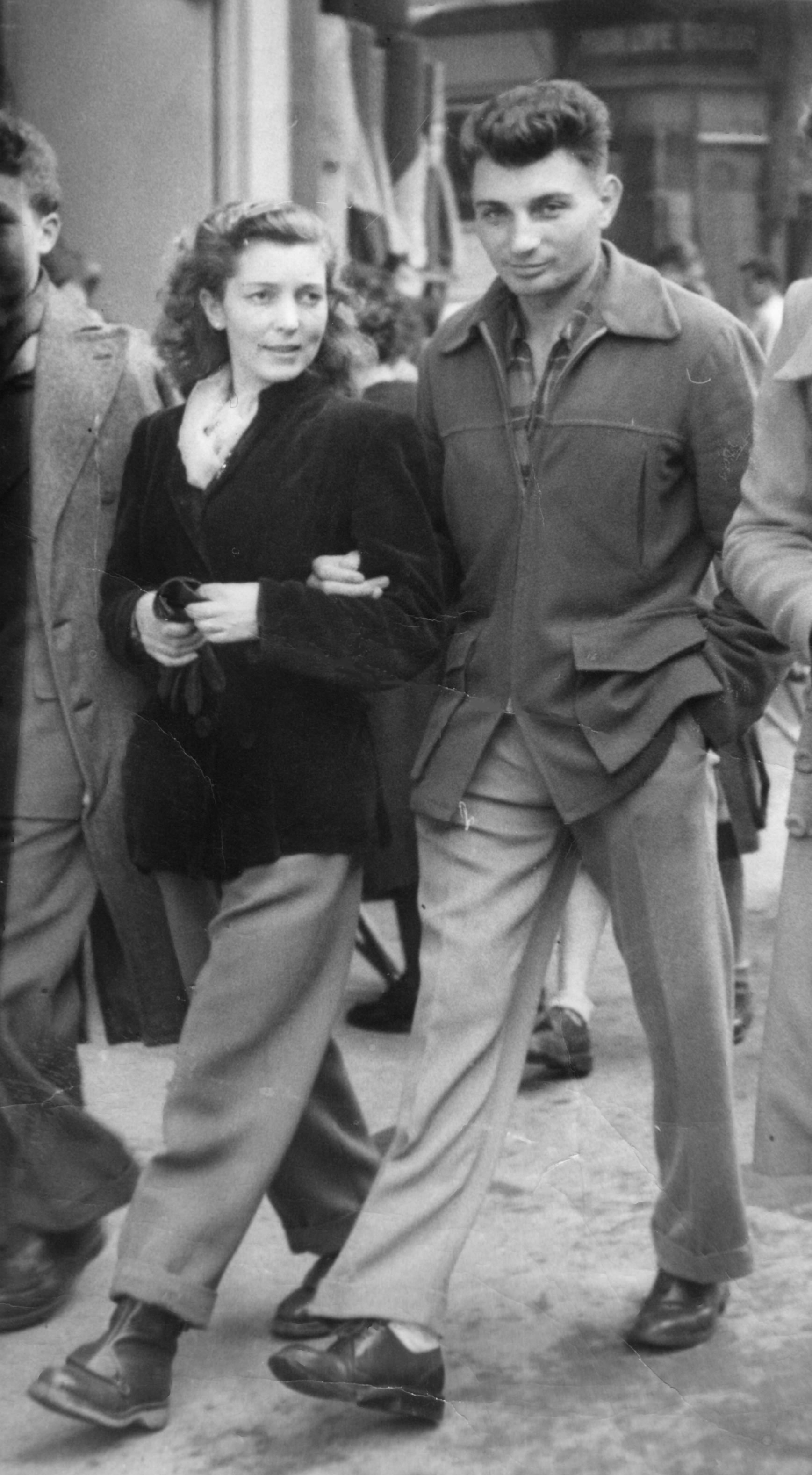
Jacqueline and Martzy, shown here in 1951, met in 1949 at a government office in Bar-le-Duc, France, and, later, at a social dance where they would first embrace. The same war that ripped apart their lives would later intertwine their lives, forever merging their fates and their families. (Jackie Smith)
“But we didn’t know any of this back then,” said Jackie, who’s 95. “All we knew was to get through the war.”
When 15-year-old Martzy hid from authorities in Vienna, Austria, police eventually tracked him down. They planned to transport him back to Romania, where he would be recruited by the German military, similar to his father. At that moment, an air raid siren went off. People scattered in fear. The police ran in one direction, Martzy ran in the other direction. He escaped danger, again.
This close-call incident would be the first in a series of extraordinary encounters and near-misses that rescued his life from an outcome that killed millions of other refugees during that war.
After the air raid, he fled Austria into Germany, avoiding border patrol officers. At one crossing, he said he hid in a field with another boy who had a bad cold with constant sneezing. As officers walked past their hiding spot, the boy managed to stifle his coughs.
“Otherwise we would have been caught,” Smith said.
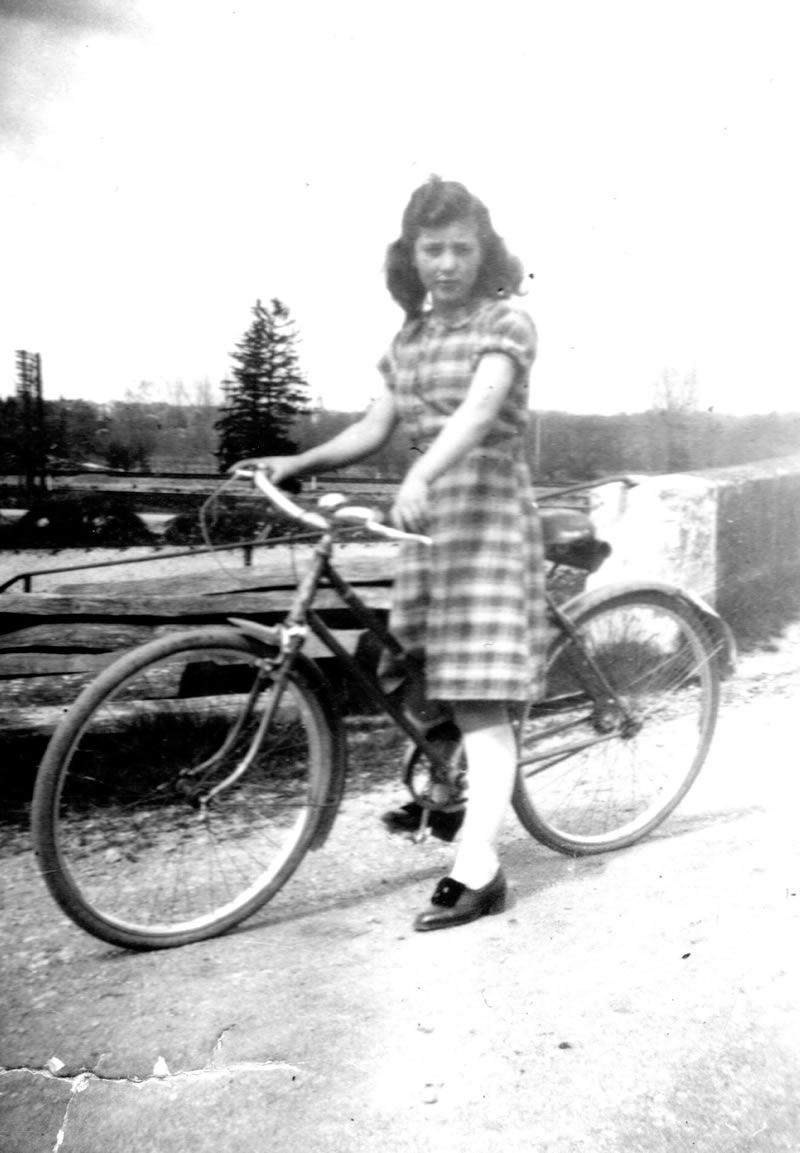
As a teenager, Jacqueline secretly helped French underground resistance fighters by transporting dynamite hidden in her bicycle handlebars as she rode past German soldiers. Her mother never knew of her patriotic yet dangerous deeds. “At that young age, patriotism is everything,” Smith said in a French accent. (Jackie Smith)
In Germany he found work at a farm, picking sugar beets, then as a mechanic apprentice at a repair garage for farm equipment in Kassel. It was there that prisoners of war taught him his first words in French. Swear words.
On Oct. 22, 1943, air raid sirens again went off. That day, Allied bombers targeted Kassel with the deadliest raid on that city, killing thousands of people and displacing more than 100,000 citizens. Smith bolted from the garage into a nearby field. He forgot to grab his jacket. By the time he remembered, it was too late. “The garage was obliterated,” he said.
That was the day he lost his identification documents. He was a refugee with no papers; a death sentence for many in his situation. When Allied troops later captured his part of the city, Smith walked toward them with hands in the air.
“How come you’re not in the German army?” one soldier asked.
“Because I’m not German,” Smith replied. “I’m Romanian.”
The soldier lowered his weapon and gave Smith a cigarette, cheese and chocolate. He was now a teenage prisoner of war, transported to a camp in Luxembourg for displaced persons. There, he lived in filthy, lice-infested, fenced-in conditions alongside Russians, Poles, Romanians and other men far from their homes.
“It was so terrible,” Smith recalled.
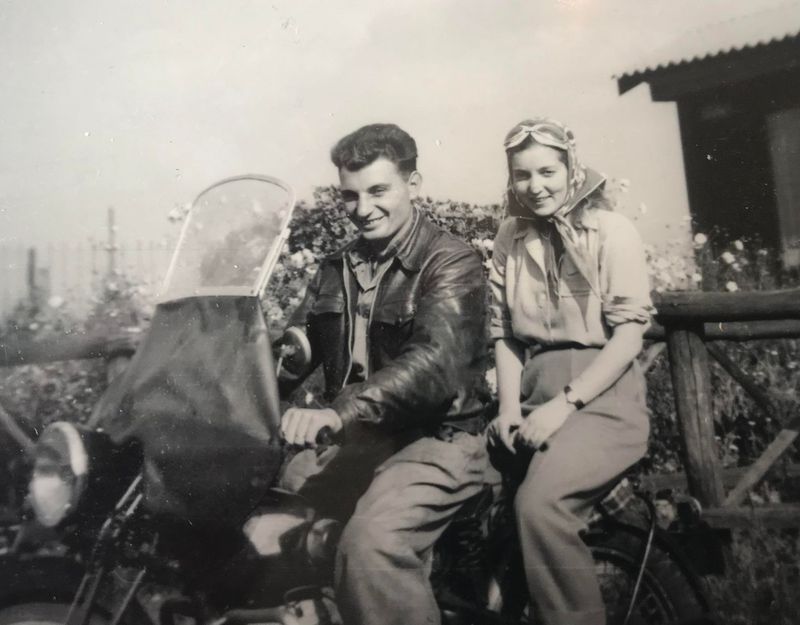
Jackie and Marty Smith, shown here as Jacqueline Virginie Guillaume and Martin Schmidt, in France, before they married after World War II. The couple immigrated to the U.S., via Canada, after their marriage. (Jackie Smith)
What he didn’t know that just over the French border, about halfway to Paris, the future love of his life was still assisting the French underground, dodging Nazi bombs on her village and fearing rape in her own home by German soldiers. The teenage girl could hear bombers flying overhead and the eerie whistling sound the bombs made as they landed on targets.
“My family never knew if one of them would land on us,” she recalled. “I’ll never forget that sound. Or the air raid sirens that scared us out of bed.”
When Russian bombs began recently targeting Ukraine sites causing evacuation sirens to go off, Jackie instinctively grabbed her chest while watching the latest war unfold on TV.
“Oh, I hate that horrible sound,” she said, shaking her head. “Those poor people. I know. I know.”
In my next column, I’ll continue her story, how she met her future husband of 70 years, and how they emigrated to this area.
Watch videos in their own words, and view more photos, on my Facebook page, https://www.facebook.com/JerDavich/.